
Why I Quit Poker
A Decade Later

Taking a small break from travel writing to revisit this piece I originally published in 2018
The first time I played was when I was 13. I loved it.
My friends and I had five dollar poker nights during the summer. The game was simple, and I quickly understood it for me. Cards, quick math, strategy — everything about it, I liked.
I played in a real poker room when I was 17. I bought in for $40. All I could hear in those rooms was hundreds of people shuffling their chips at once. I was in a gambler’s paradise. I was playing for a lot more money by 19. I made the final table for a tournament called the College Poker Tour and was invited to play at a live event at 20.
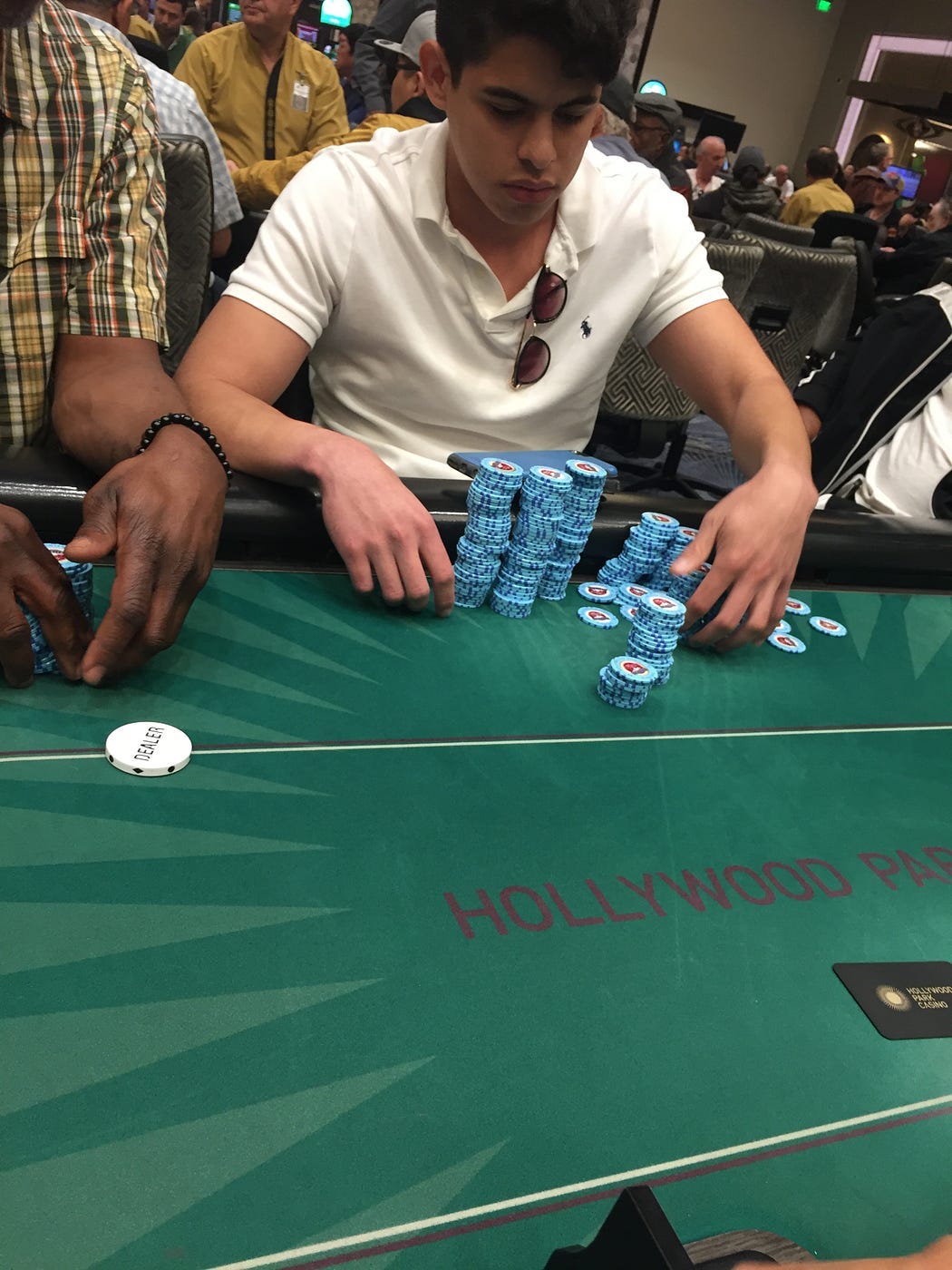
Now, at 21, I quit. Here’s why.
1) Poker is not profitable
This reason itself is enough to make one re-think poker. Making money, consistently, in poker is extremely difficult. But there’s a bigger reason why making money is tough.
Rakes.
Because you’re not playing against the house in poker, the casino makes money by taking a small cut out of each pot played. Every casino is different and rakes range in amounts. But generally, the rake is a small percentage of the pot capped at a dollar amount. Poker rooms also take a small amount from each pot for their jackpot prize pools and the winner of each hand should tip the dealer.
Making sense? It’s not supposed to.
But let’s assume you’re sitting at a 1-2 no-limit hold ‘em table. Buy-ins are for 100 to 300 dollars. The rake for a table is 10% of the pot with a limit of $5, the table takes $1 each hand for the jackpot, and the winner tips the dealer $1. That’s $7 out of each pot assuming the pot is larger than $50.
Some math: Nine players. Each buy-in for $200. Total cash on the table = $1,800. Thirty hands played on average, per hour. With the rake, it would only take four hours for half of the money on the table to disappear. Meaning if nobody buys in again, half of the money is gone just to the casino after four hours. Per player that’s costing ~$24 per hour. So, for you to even think about making money you have to beat the $24 cost of playing.
You’re not playing against a casino when you play poker. Unlike blackjack or craps, you’re playing against other players. The casino only provides a dealer, the table, the cards, and chips to give you the chance to gamble against each other. The $24 is a broker fee. A very expensive one if you’re playing for anything less than $1,000.
2) Losing sucks
Poker was fun. Having chips in front of me and shuffling them. Betting. The feeling of my heart beating all the way up to my throat. Winning hands. I loved being the kid playing against people who were decades older. And I grew to enjoy the rush of the nerves when I was in a big hand.
But I hated losing more than I loved winning.
The feeling is hard to describe. When you lose hundreds of dollars your morale takes a hit in a weird way. Go to a casino and ride up the elevator late at night. The elevator might be full, but it’ll be quiet. Silent because people are thinking about what they lost. And silent because people are thinking about all they could’ve done with that money they lost. The elevators are also quiet as some are promising God, with their eyes closed, they’ll never gamble again if they could somehow have their money back.
And despite how great the nights of winning were, the losses were always more memorable. The car rides home are what separate poker from other professions or games and those car rides were more often than not too quiet.
3) Gambling is like other addictions
I’ve seen and met hundreds of people at casinos and underground games. Kids who think they have an edge. The guys who wore hoodies and sunglasses. The analytical ones. And those who rely on reading their opponents. But the ones I hated seeing the most were the old people I’d see every single time at a smaller table playing for $100.
I hated seeing these people because I wondered if that would be me.
What I didn’t seem to realize is gambling is as real as other addictions. There is denial, compulsive behavior, and the inability to rationally deal with stress in casinos.
I don’t know how many hours I spent in poker rooms, underground games, casinos, or house games. But if I had spent half of that time studying piano or derivative markets, I’d be an expert by now with a real, tangible talent I could use in life.
And here’s the thing — I never became an expert in poker because I was playing a game that was designed for me not to win in the long run.
And eventually I went from poker nights with friends to underground games multiple times a week.
And eventually playing with a third of my net worth on the table.
There are some real skills that can be developed from poker I am grateful for. But the truth is, poker rooms aren’t what you see on TV and the majority of people there aren’t studying or developing these skills. They’re gamblers.
4) You are who you surround yourself with
You are the average of the five people you spend the most time with.
In poker, you sit around eight other people and a dealer. Some of the most interesting people in my life I met through poker. But, those were anomalies.
Unlike movies, casinos are boring and repetitive. People aren’t smiling on weekdays at noon. Nobody is really happy.
Casinos make the majority of their revenue from you losing money. Even for major casinos, less than 25% of their revenue comes from hospitality or food and drinks.1
And in poker rooms, there’s a similar phenomenon. Though, unlike other casino games, in poker you’re playing against other players, not the casino. So, for one person to win, another has to lose. Your wins are coming directly from someone else’s stack.
But, because the casino is taking such a big rake, for one to realistically make good money, 3-4 people need to lose that money. And few, if any, are making good money. What does this mean? The majority of people playing poker are losing.
Is it logical, or even rational, to go to a place where you’ve lost money before and know you’ll lose again? The point is if you look around those rooms, the majority of people are losers. Losers because they’re actively doing something else — losing. And I didn’t want that to be my inner circle.
5) Morality
Finally, poker had one other fatal flaw.
I played other casino games sometimes. Blackjack and roulette were fun and quicker and had a better atmosphere during the weekends. And when my friends and I all won money at the blackjack table it was even better.
But poker is different. In poker, you play against other people. And the good feeling was from ‘outsmarting’ other people, not from outsmarting the casino. This made me like the feeling even more. I am better, I am smarter, I thought.
Although making money playing blackjack was even harder, what made it more fun was the fact that the table gets to win together. Everyone is rooting against the house so all the players can win.
It took me a bit to consciously be aware of it, but for me to live the high in poker, somebody else had to live the low. But finally one day, I thought about it.
Playing poker isn’t necessarily immoral and taking other people’s chips at the table isn’t either. But the fact that there were nine of us at the table and we were all inherently cheering for each other to lose is what I didn’t like. I’ve already described how bad losing was and I realized I was actively participating in others experiencing that feeling I hated so much by being in those rooms.
Poker was a zero-sum game and I wanted out.
A decade later
I wrote this about ten years ago after spending a few years of my life trying to become a serious poker player. And reading it back a decade later, I feel conflicted. For one, I’m embarrassed by the listicle format and advice-giving writing style. When I started writing, I exclusively wrote fiction and tried to develop strong characters. This was my first attempt at nonfiction.
But more importantly, I disagree with some of the points I made. Like I wrote about with drinking, I think gambling becomes boring once the first high is stripped away. And poker is definitely not profitable. There are very few winning players. And the morality argument? I was trying to prove a point that didn’t really exist. I still don’t resonate with the characters at a poker table. But while I don’t see myself as the same, we’re all sitting at the same table.
Poker was the first thing I chose to do alone in my life. Driving to underground games as a freshman in college felt like I was living a real life I hadn’t lived in high school. And, looking back, many parts of my personality came from poker like observing and staying quiet. Or my ability to do things solo. And most importantly, it made me start writing fiction to cope with the life I was entering.
Like everything else I did when I was 18, I tried to do it half heartedly. I was playing poker and watching videos but I didn’t study poker and I didn’t really ever develop the discipline a professional player needs.
So ten years of not playing poker. Why repost this now?
Well, I just got back from a sabbatical. A year of full-time travel.
During that time, I looked back on my life for once. And I started thinking about that thing I used to do but never took all the way. And I thought — what would’ve happened if I didn’t do it half ass? What if I actually studied and played tournaments rather than cash games? What if I had a real bankroll and played big enough games where the rake was less than 1%?
So, a decade later, it might be time to find out. I sat down at a table, with headphones and a hoodie on like I used to, last week for the first time in ten years. Same sound — hundreds of chips shuffling at once. Same feeling in my throat.
But this time, I knew what I was walking into.
I wrote a novel around the same time as this essay. The One Knight Stand follows a college poker player through the night before the biggest game of his life. The fiction is better than the nonfiction — turns out I was a more honest writer when I was hiding behind a character. It’s the companion piece to this essay, written by the same kid who hadn’t figured out his voice yet. Check it out here.